Poteri

Tuesday, 20 October 2009

Mi ricordo che quando andavo alle elementari, mi insegnavano che nella democrazia italiana c’era la suddivisione dei poteri: il potere esecutivo, esercitato dal governo, il potere legislativo, esercitato dal parlamento, e il potere giudiziario, esercitato dalla magistratura, e come, if fatto che nessuno avesse in mano più di uno di questi poteri, garantiva uno stato libero ed egalitario. Alle elementari, concetti che un bambino poteva capire.

Quando sono passato alle medie poi, mi insegnavano l’educazione civica. Mi ricordo che durante un anno di scuola, il libro di testo era la Costituzione della Repubblica Italiana. Le lezioni consistevano nel leggere un articolo per volta, e imparare cosa significava. Un’articolo alla volta, si faceva tutta la costituzione, incluse le disposizioni transitorie e finali, per capire il contesto in cui era stata scritta.

C’erano cose come la libertà di pensiero, la libertà di stampa, e la libertà di parola (art. 21), a garanzia della libertà di espressione.
C’erano cose come l’obbligatorietà dell’azione penale da parte del pubblico ministero, espresso in una semplice frase, a cui è dedicata un’articolo tutto suo (art. 112), a garanzia che tutti i reati vengano perseguiti, non solo quelli che fanno più comodo.
C’erano cose come l’uguaglianza dei cittadini (art. 3), a garanzia che nessuno la possa fare in barba alla legge.

Guardando a quello che succede in Italia di questi tempi, mi sembra di non poter che concludere che gli insegnanti che ho avuto io a scuola, siano stati l’eccezione piuttosto che la regola. Mi sembra che la maggior parte degli italiani, non abbia mai sentito parlare di cose come queste, e che quando ne sente parlare, non le capisca, e accetti passivamente le spiegazioni (o meglio i ritornelli) forniti da chi comanda. Mi sembra che chi comanda, la costituzione non l’abbia mai letta né capita, e che la consideri una rottura di scatole, che prima si riesce a far fuori, meglio è.

Quanto ci vorrà perché noi italiani ci svegliamo, e ci rimbocchiamo le maniche per riaffermare queste cose che erano considerate importanti da chi ha scritto quella costituzione, dopo aver subito anni di fascismo e di guerra? Dovremo forse ripetere gli errori del passato, per ritrovarne i rimedi?

Mia figlia ha la doppia cittadinanza, perché viviamo all’estero. Vorrei poterle insegnare l’orgoglio e non la vergogna di essere italiana. Vorrei che crescendo, non debba sentire le istituzioni italiane fatte oggetto di barzellette, come succede a me coi miei colleghi e amici.

Svegliamoci, non facciamoci rubare quel che ci resta del nostro paese!


Italy: coup, civil war, or resurgence?

Friday, 9 October 2009

I am getting the impression that Italy is on the brink of something dramatic. In the last few years, the government led by Mr Berlusconi has wrecked the economy, in the pursuit of their own interests, and those who would give people in power a good return.
Parliament has been nothing more that a rubber stamp for laws to allow Mr B and associates to pursue those interests, and avoid having to face the consequences of breaking existing laws.
The media has been subjugated into being the government mouthpiece and censor (even though, by listening to Mr B it seems they are all out to get him).
The judiciary has been obstructed and deligitimized, to avoid prosecution.
The people have not been able to exercise their democratic rights, thanks to a distorted electoral law, allowing the main parties to choose who to send to parliament.

In brief Italy is headed for financial ruin, and democratic disintegration. However, it might not be too late yet. More and more people are waking up from the media (TV especially) induced slumber, and are starting to realize what is going on.

The following scenarios are the ones I see possibly happening:
1) The goverment, or groups close to it, will finally break all pretences of legitimacy, and be done with laws, the constitution, and turn the country’s form of goverment into a tyranny. This would seem the logical next step, for what today is quite close already to an oligarchy.

2) A civil war will break out, as the above is attempted, and large parts of the population refuse to put up with it, and decide to take up the struggle in defence of the republic.

3) A large majority of people will start getting involved in public life, and start a peaceful revolution from the bottom up, legally entering the centres of power, a bit at a time, and putting into play those values that seem to have disappeared from Italian politics, so fostering a resurgence of the country. Moral first, and economical following up.

I really do with for scenario 3), and some hopeful signs are already present (Movimento a 5 stelle (for civil politics), and Il Fatto, for an independent media, just to name two).


Canal boating

Monday, 5 October 2009

Discovering beautiful places on your doorstep, can almost sound like a cliché.

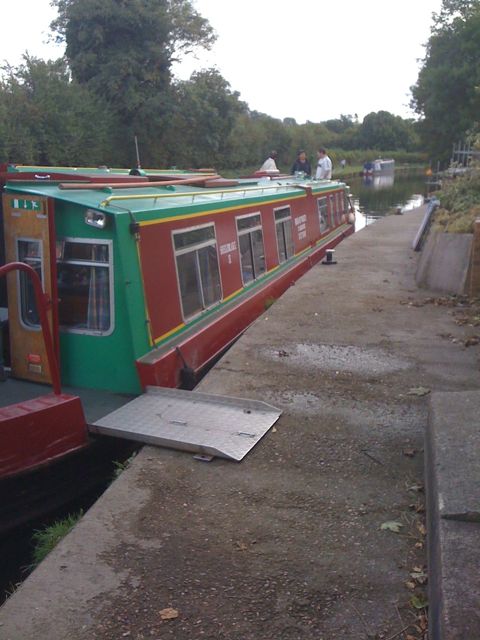
Well it happened to me last weekend, as we went canal boating with friends for the afternoon. I often moan that Hertfordshire is not as idyllic as other countryside spots, and that the ever-present motorways spoil the landscape (both visual and auditory).

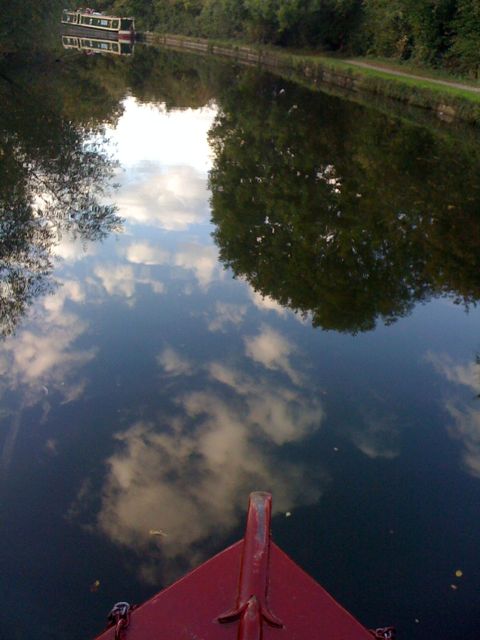
However, as we were chugging along under the M25, and along the A41, it almost felt like they belonged to a different world. In our world we spotted a red kite in the air, we passed by a braying donkey, we met a number of ducks and swans going about their business, or catching a nap in somebody’s garden, and we could see the whole landscape reflected in the water.

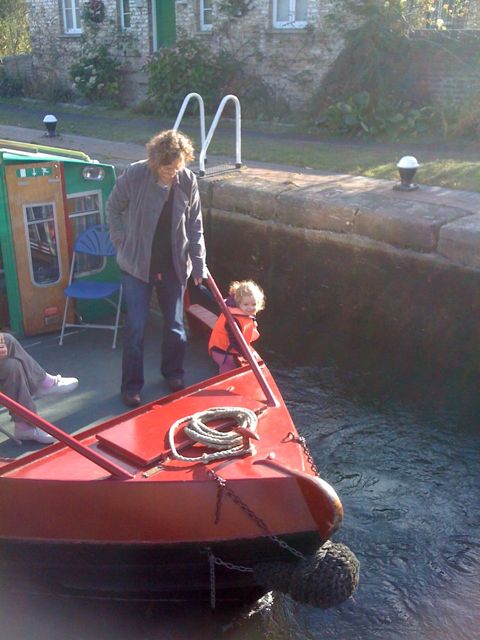
We still had to keep an eye out for Annalisa, to make sure she didn’t let her curiosity and sense of exploration take her overboard, just to see what happened there: some things always stay the same, even in a canal boat!


Justice vs Mercy vs Revenge

Wednesday, 2 September 2009

The decision by the Scottish executive to release the man generally known as the “Lockerbie bomber” has been causing a lot of controversy, and is taking up a lot of time in the media, and in politics.

Maybe because I was not personally affected by it, but I am getting the impression it is a storm in a teacup. Do we really believe that the UK government has done a deal with Libya based on his release? It seems to me that’s just what the opposition parties insinuate, to further discredit the current government (as if it needed it!).
Sacrificing justice to commercial deals probably is something most people find immoral, and rightly so. But then why focus so much on the release of this one prisoner, and not on his whole trial? Doesn’t the fact that he was the only person convicted, for what seems very unlikely to have been a single man operation, smack already of injustice, and of backroom deals? There are still so many unanswered questions about the whole attack, that frankly being outraged about the convicted bomber being released, as opposed to not having all the actual bombers, planners, masterminders, etc. brought to court, sounds a bit like focusing on the radio not working in a car that is  being written off after an accident.

One could say that however having a convicted person, at least gives some sense of justice and closure to the victims, or their relatives. While I might well be accused of not being qualified to speak, as I did not suffer beacause of the incident, I still feel that, rather than a sense of justice, the fact of having somebody in jail for this crime, tends to satisfy the thirst for revenge, rather than the necessity of justice.

Let’s say however that all of the above is irrelevant. Let’s say that the convicted bomber and the actual bomber are the same person, and that no one else was responsible for it. It’s all on him. And his conviction actually means that justice is served. Can we not as a country, or as a group of countries (given that the US have very strong feelings about this whole affair,  given that most of the affected people belonged to that country), find the mercy and compassion towards this one man, to let him spend the last few months of his life at home (and let’s remember how hard we feel that our own fellow countrymen  should be allowed back home, when they are convicted abroad)? Have we become a nation of people who cannot  forgive, and have mercy, even towards those who have deeply hurt us? Are we able to differentiate between revenge and justice? And speaking at a country level, even if it was true that Libya was involved in the Lockerbie bombing, have we ever  acknowledged the hurt that we have caused to other countries (quite possibly including Libya) by economic exploitation, war, etc.? What makes us so sure that we have the moral high ground?

So if we are quite so lenient with ourselves, can we not find it to be compassionate towards somebody else? After all, somebody once did say that the same measure we apply to others, will also be applied to ourselves.
Maybe that is what really Mr MacAskill was thinking about when he decided to release Mr Megrahi.


Bailout

Wednesday, 11 March 2009

Are governments going the right way about bailing out the economy? Let’s see. They are spending lots of money (lots so big that I am not entirely sure how many digits the total figure has got!), on banks and car manufacturers (mainly). The rationale being (as I understand it), that if the banking system fails, the whole economy fails, and that car manufacturers employ so many people (directly and indirectly), that the economy would badly suffer (not to talk about all the votes lost for the next round of elections) if the industry didn’t get help.
This way however many people feel cheated, as they see the banks being given lots of money after they have made a mess of it, often on our backs, and the car manufacturers get help even though they got stuck making cars people don’t want, and that are bad for the environment. And what about all those working in viable businesses, who have applied best practices over the years, but who don’t get any bail out help during this recession? I would say there might well be quite a few resentful people out there. Not good for votes. And those people who do not get bailed out, won’t be producing and therefore won’t be helping the economy either.

How about giving the money to the people directly, to spend on paying back their mortgages, and buying new cars? The money could be given in form of vouchers, so that people can’t spend it on holidays and booze (for example), but can only use it for mortgages and cars. This way, a good chunk of the loans gone bad because of falling house prices would be paid back (as well as the good loans, so that everybody can own their own home, and nobody feels cheated), and people could buy new cars. The details could be worked out to try and make it as fair as possible to everybody, but the idea being that the vast majority of people would end up owning their own home, and a new car. Banks would get rid of lots of outstanding loans, thus reducing the uncertainty about their exposure to bad loans, which is at the base of the credit crunch, which is at the base of the recession. Car manufacturers would still receive an injection of cash as people would be buying new cars, and the system could be skewed towards greener cars, so that manufacturers who have invested in green technologies are advantaged.
It seems to me that this would be good for the economy, and for votes.
The main argument I can see, against my solution, is that it would cost a lot more than current bail out schemes. But that is assuming that the current bailout figures are the final ones, and I am not convinced of that.

Why wouldn’t my scheme work any better than what governments are currently doing?


The price of justice

Tuesday, 9 December 2008

I recently asked myself “What is the price of justice?”. The first answer that surged through my mind, with strong feelings associated to it, was something along the lines of “It’s priceless, of course!”.
But what does that mean? If it means that it can’t (or shouldn’t) be bought or sold, then I think most of us would agree.
However it doesn’t mean that justice is administered for free: otherwise lawyers and judges would be a very poor lot (and by all accounts they are not), and of course police, court staff, facilities, equipment etc, they all cost money.
As part of society we all benefit from the justice system (except when it goes wrong), so one might say it is right that we pay for it through our taxes.

Some time ago in the news, however, the case of a robbery (loot value about £1.75M) collapsed for the third time (or was it the fourth?), and so far the bill to the taxpayer has been about £22M, over 12 times the value of what was stolen.

Now we all agree that justice needs to be done, but as you wouldn’t expect a shoplifting case to up to the high court (as the gravity of the crime is not worth it), is it worth spending all this money in prosecuting a case where the crime consists of less than a 12th of the money stolen?

As for the victim(s), he/she/they could have been repayed at much less a cost to the taxpayer, so the compensation part of justice could have been done.

In case of compensation only to the victim however, that part of justice which demands that the perpetrator of the crime pays for it, and gets the appropriate punishment, would still be unresolved.

So how valuable is this aspect of justice? Can a price tag be put on it?

Is it priceless? Does that mean we should be ready to pay any price to see justice done?


Free Blogger

Friday, 14 November 2008

This post is in support of the Free Blogger campaign against the law proposed in the Italian parliament, to severely limit the freedom of speech through blogs on the internet.
I’m not going to put all the info here, as you can find it at Beppe Grillo’s blog

Questo post è in sostegno della campagna contro il disegno di legge proposto in parlamento (DdL Levi-Prodi) che, se approvato, limiterebbe gravemente la libertà di espressione sui blog in internet.
Vi rimando al blog di Beppe Grillo per i dettagli.

FrEe bLoGgEr

FrEe bLoGgEr


Meltdown

Saturday, 1 November 2008

First was the threat of the ice melting down, polar caps and glaciers. Now we have the threat of the financial system melting down as well.
Both meltdowns seem to have globally disastrous consequences, which we are incessantly told about by the media.

However, I find myself wondering whether these should really be the concerns at the top of my list.

The first reason I find to doubt whether I should really be worried about the meltdowns, is that dramatic predictions about dire scenarios have been made plenty of times before, and seldom they have come to pass (e.g. a new ice age, the y2k bug, etc.). Of course this time the predictions might be right, but there are still so many things we don’t really understand (both in how the climate works and the economy, scientific, technological and maths advances notwithstanding), which makes these predictions quite vague on a quantitative level, if not on a qualitive level as well. You might argue we should prepare for the worst case scenario, but then how often do you do that in your personal life, or with your personal finances?

The other reason is that I think there are more pressing issues to worry about: for example the injustice of wealth distribution in the world (a small percentage of the world population consumes a much higher percentage of the world resources), causing lots of poverty, misery and wars around the world. Of course global disasters will affect everybody, but is it really worth preserving a world where so much injustice takes place? If we put lots of effort into “saving” the world, should we not put at least as much effort in making it worth saving? Or as worth as possible?


New blog!

Thursday, 23 October 2008

Well this is the beginning of my new blog. Here I can rant about anything I want, and you can express your assent or utter disbelief at whatever I write.

More to come, stay tuned!